Minimum Viable Product: Engineering Wisdom That Beats Perfect Architecture

Introduction — The Engineering Paradox
Engineers love clean systems.
We obsess over:
- Proper abstractions
- Scalable architecture
- Edge-case coverage
- "Doing it right the first time"
This instinct isn't wrong. It's essential for systems that already need to exist.
But here's the uncomfortable truth:
Most products don't fail because the code is bad.
They fail because they solved the wrong problem extremely well.
That's why Minimum Viable Product (MVP) beats almost everything else — especially for engineers who default to building perfectly for problems that may not even matter.
MVP Is Not "Bad Code"
It's Intentional Incompleteness
Let's clear up the most persistent misconception.
MVP does not mean:
- ❌ Spaghetti code everywhere
- ❌ No tests at all
- ❌ Zero thought about the future
- ❌ Technical debt by design
MVP means:
Build the minimum system that answers one risky question about reality.
Engineers usually optimize for:
"Can this scale to a million users?"
MVP asks:
"Should this exist at all?"
"Will anyone actually use this?"
"Does this solve a real problem?"
These are fundamentally different questions. The first assumes demand. The second tests it.
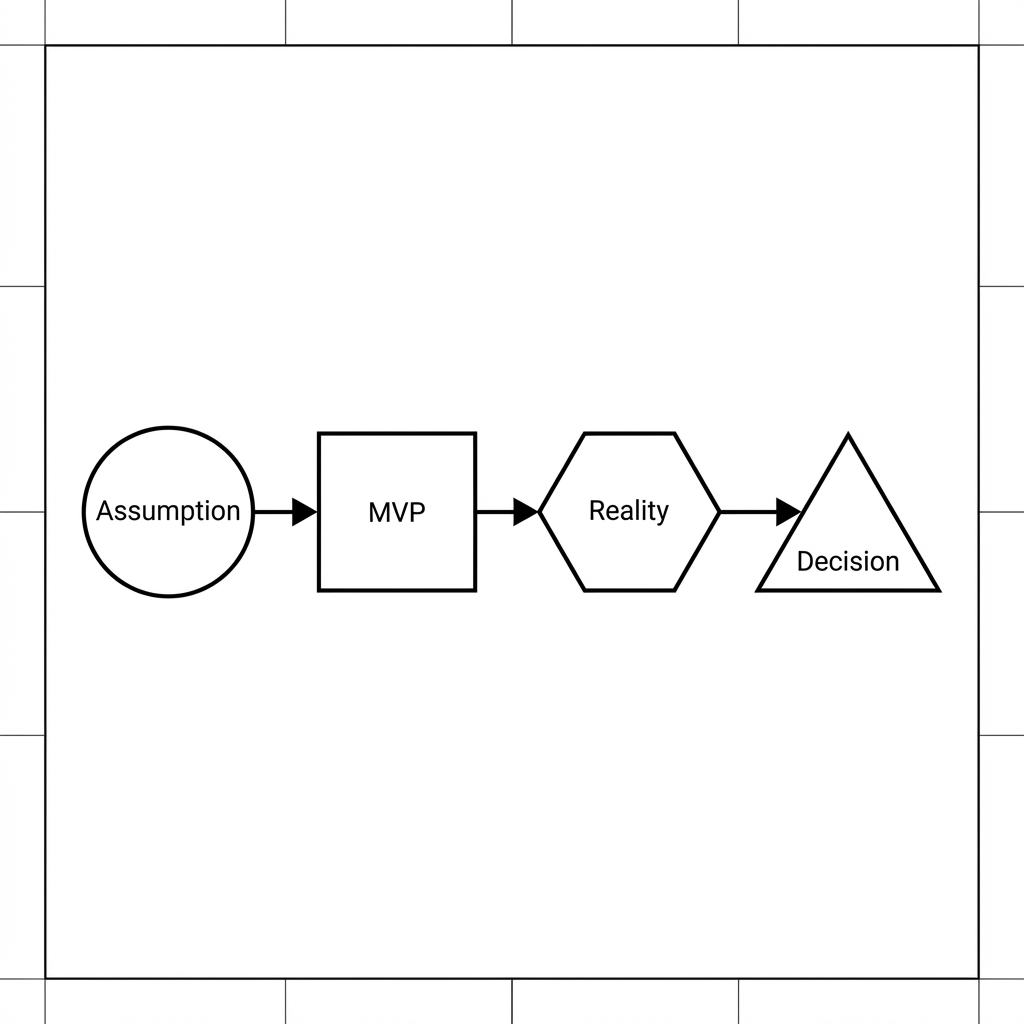
MVP Is a Feedback System, Not a Feature Set
Think of MVP like observability in production systems.
You don't add logs, metrics, and traces because it's fun.
You add them because you're flying blind without feedback.
MVP does the same thing — but for product truth instead of system health.
Without MVP:
- 💭 You debate opinions endlessly
- 🏗️ You over-architect for hypothetical scale
- ❓ You argue about edge cases that may never happen
- 📊 You make decisions based on gut feelings
With MVP:
- ✅ Users vote with actual behavior
- 🔪 Data kills bad ideas early (and cheaply)
- 🎯 Direction becomes obvious instead of debatable
- ⚡ Iteration speed compounds
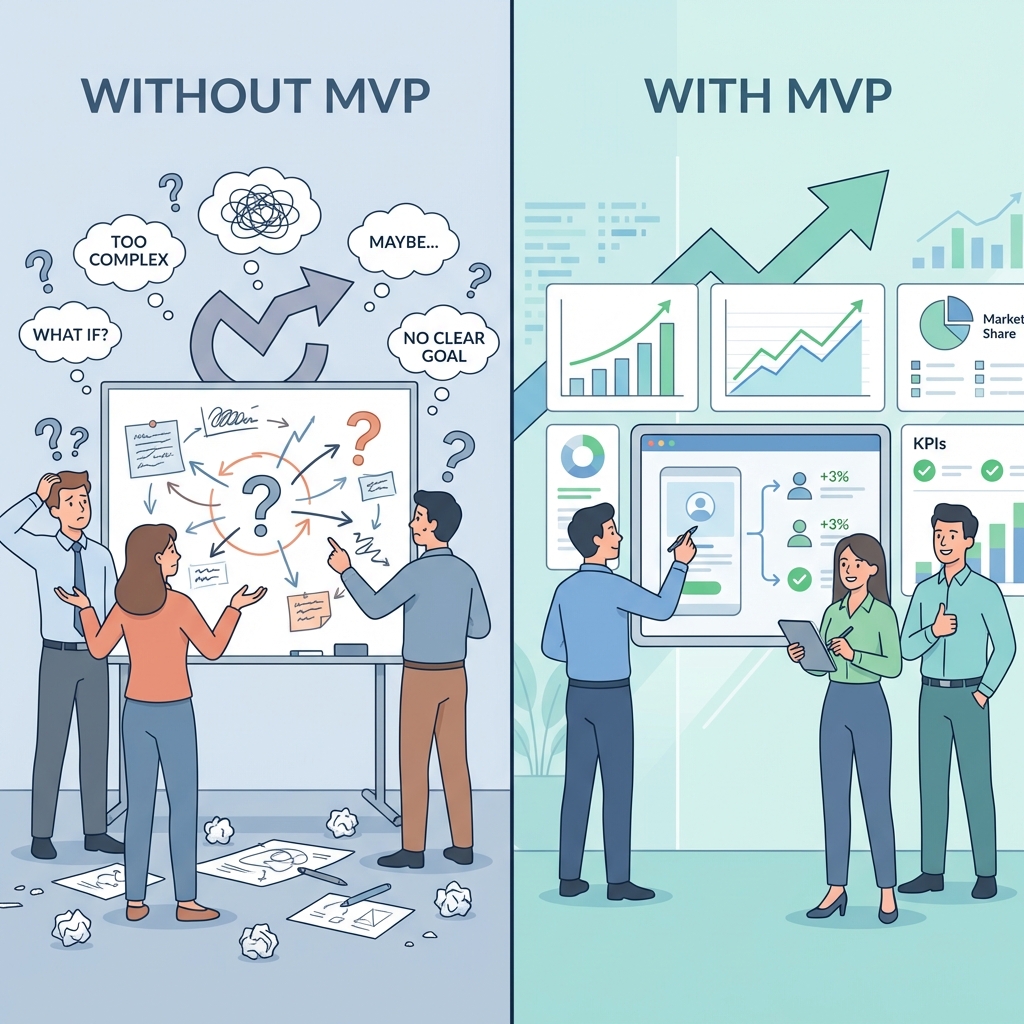
The meta-insight: MVP is less about shipping fast and more about learning fast. Speed is just a side effect of keeping scope ruthlessly small.
Real Company Examples Engineers Respect
Theory is nice. Let's look at how real companies — ones you've heard of and probably use — leveraged MVPs to validate demand before investing in "proper" engineering.
🏠 Airbnb — MVP as Manual Operations

Airbnb didn't start with:
- Fraud detection systems
- Scalable infrastructure
- Dynamic pricing algorithms
- Review moderation pipelines
Their actual MVP was:
- A simple website (basically a CRUD app)
- Founders personally onboarding hosts
- Founders personally taking photos of apartments
- Manual payment coordination
Engineering takeaway:
They delayed solving scaling problems until demand was proven. Building a fraud detection system for zero users is waste. Building it for 10,000 hosts is smart investment.
The pattern: Start with embarrassingly manual processes. Automate what hurts.
📦 Dropbox — MVP as a Demo, Not a Product
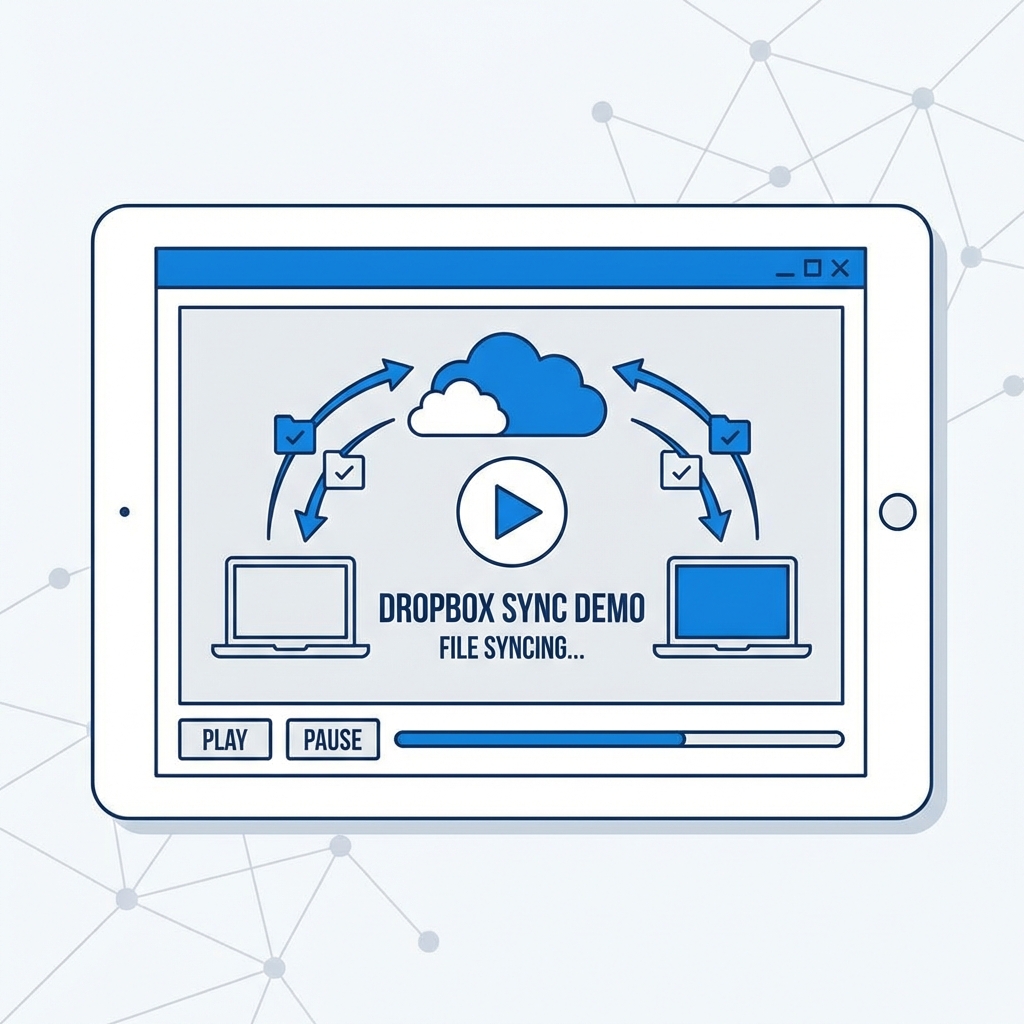
Dropbox's first MVP wasn't even a working system.
It was:
- ✅ A 3-minute demo video
- ✅ Showing file sync as if it already worked
- ✅ Posted on Hacker News
Result:
Beta signups exploded from 5,000 to 75,000 overnight.
Engineering takeaway:
Sometimes the best MVP avoids engineering entirely — until the riskiest assumption is validated. The risky assumption wasn't "Can we build file sync?" (They knew they could). It was "Will developers actually want this?"
The principle: Test demand before building supply.
💳 Stripe — MVP as One Killer Developer Workflow
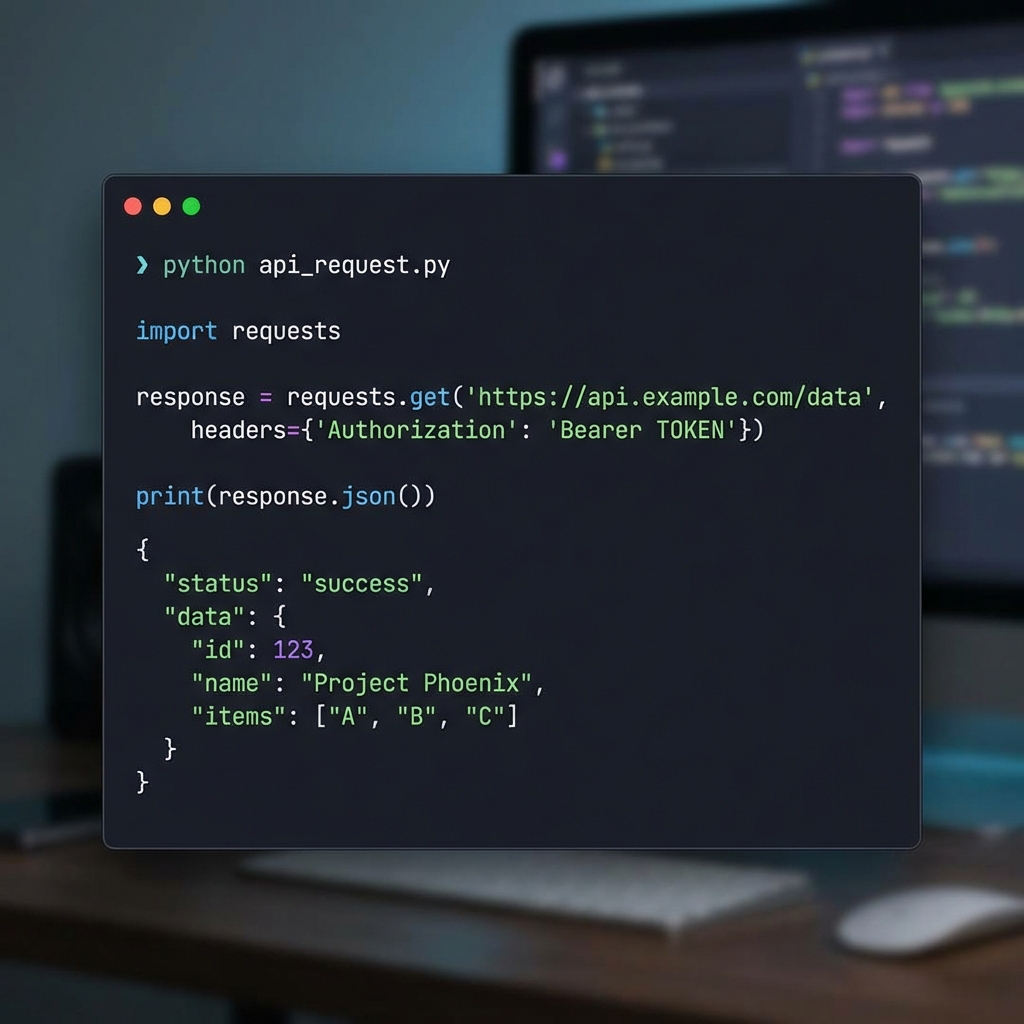
Stripe didn't win because payments were new.
They won because they shipped one magical experience:
# Before Stripe (PayPal, Authorize.net)
# - Multiple pages of forms
# - Weeks of integration time
# - Terrible documentation
# - Manual merchant account setup

# With Stripe (MVP version)
curl https://api.stripe.com/v1/charges \
  -u sk_test_YOUR_KEY: \
  -d amount=2000 \
  -d currency=usd \
  -d source=tok_visa \
  -d description="Test charge"

# Result: { "id": "ch_1234", "status": "succeeded" }
That's it. Seven lines of code. Payments in 5 minutes.
What they DIDN'T build initially:
- ❌ Full billing platform (added later)
- ❌ Subscriptions (added later)
- ❌ Connect marketplace (added later)
- ❌ Global compliance (expanded over years)
Engineering takeaway:
They picked one developer pain point (complex payment integration) and made it absurdly simple. Then they expanded from that beachhead.
The insight: An MVP doesn't need to do everything. It needs to do one thing so much better that people can't go back.
The Spectrum: MVP vs Over-Engineering
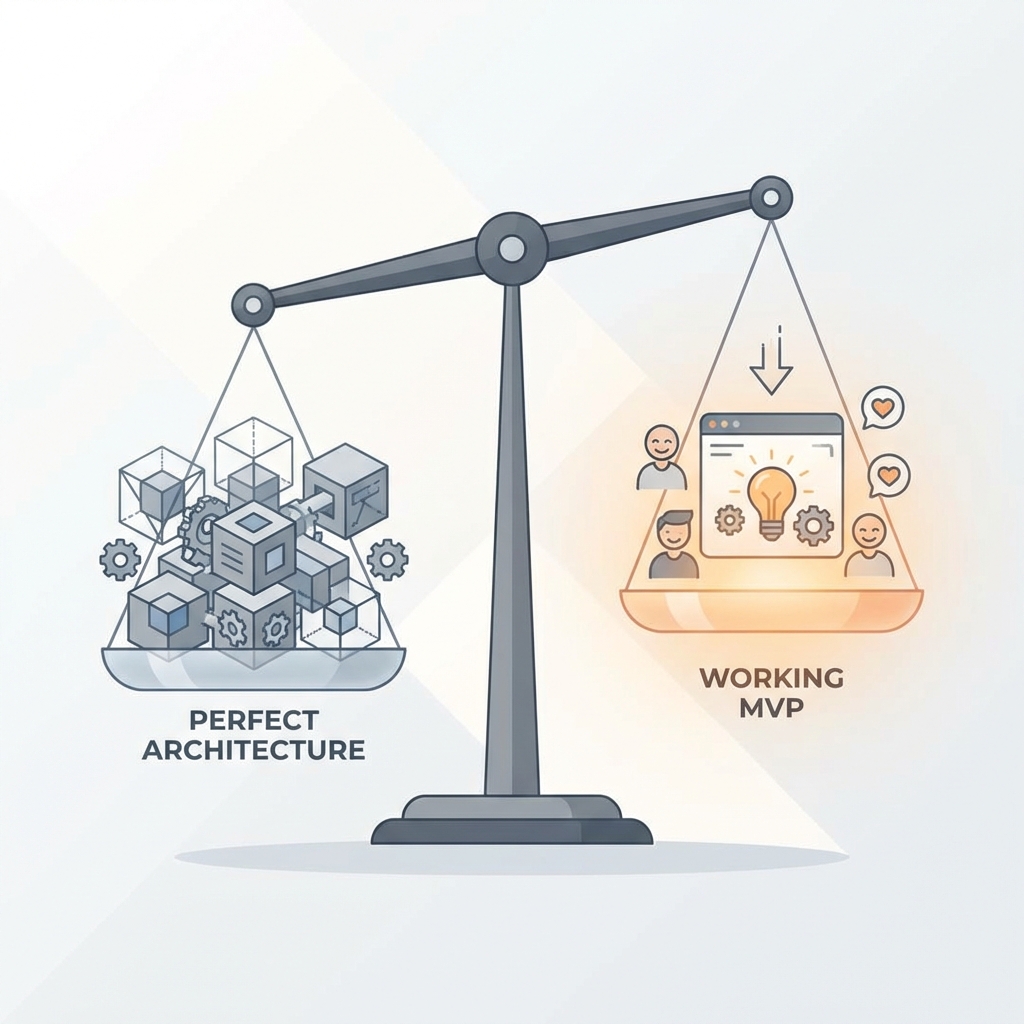
Let's be honest about where engineers tend to fall on this spectrum:
🎯 Healthy MVP (Sweet Spot)
Characteristics:
- Automated tests for core flows
- Basic error handling
- Simple deployment process
- Logs for debugging
- No premature optimization
Philosophy: "This will break in predictable ways if we're wrong. That's fine."
🏗️ Over-Engineered (Engineering Trap)
Characteristics:
- Microservices for a product with no users
- Complex CI/CD pipeline before first customer
- Kafka/Redis because "we might need it"
- Three-tier caching strategy
- Database sharding for 100 rows of data
Philosophy: "We're building this to scale to millions!" (Narrator: It never got there.)
Why it fails:
Not because the engineering is bad. It fails because all that effort was spent on the wrong problem. You built a Ferrari for a road that doesn't exist.
⚠️ Reckless Prototyping (Dangerous)
Characteristics:
- No version control
- Zero error handling
- Hard-coded credentials in code
- "Works on my machine" as deployment strategy
- No way to rollback
Philosophy: "Move fast and break things!"
Why it fails:
Yes, you learned fast. But now you have a house fire disguised as a product. And your early adopters — the people who trusted you — are the ones who got burned.
The Iteration Advantage
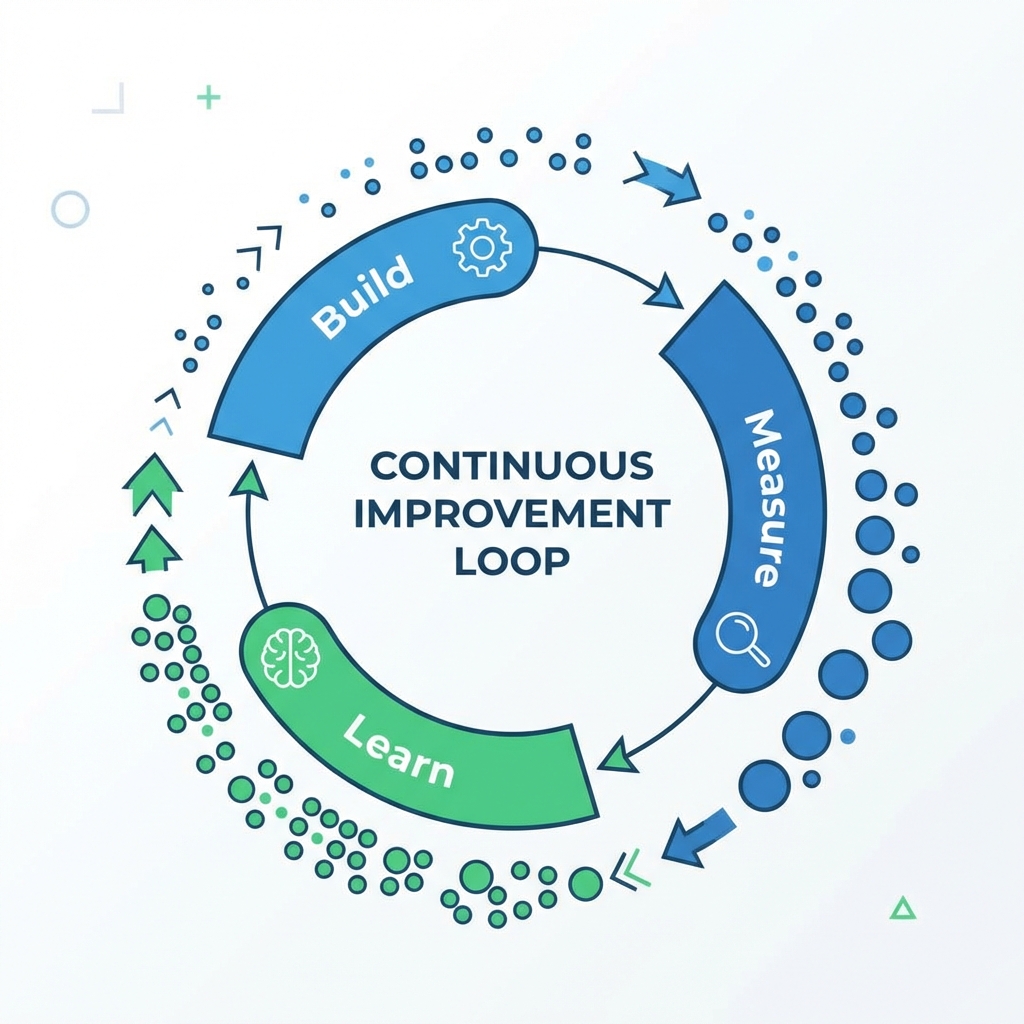
Here's the compound effect that most engineers miss:
Perfect First Time:
  6 months → Launch → Learn you built the wrong thing → ❌

MVP Iteration:
  2 weeks → Launch → Learn → Pivot → 2 weeks → Launch → Learn → Adjust → 2 weeks → ...
After 6 months:
- Perfect approach: 1 data point, potentially wrong
- MVP approach: 12+ iterations, converging on truth
The math is brutal: Iteration speed compounds faster than perfection.
And here's the kicker: The team that shipped 12 times learned 12x more about their users, their domain, and their own code than the team that shipped once.
When NOT to MVP
MVP isn't a universal law. There are contexts where it's the wrong strategy:
🚫 Life-Critical Systems
Medical devices, aviation software, autonomous vehicles.
Why: The cost of being wrong is literal death. You don't MVP your way into FDA approval.
🚫 Regulated Industries (Sometimes)
Banking, insurance, legal compliance platforms.
Why: Regulatory overhead often makes the "minimum" still enormous. Though even here, companies like Robinhood found ways to test narrow use cases first.
🚫 Deep Infrastructure
Databases, operating systems, compilers.
Why: No one adopts a "potentially broken" Postgres. Infrastructure needs reliability from day one.
🚫 When You Already Know
If you've built this exact thing three times before in different companies, you don't need to validate the problem again. Just build the damn thing.
How to Actually Build an MVP (The Engineer's Checklist)
Here's a practical framework:
1. Identify the Risky Assumption
Not all assumptions are equal. Focus on the riskiest one:
- ❓ "Will users pay for this?"
- ❓ "Can we acquire users cheaply enough?"
- ❓ "Is the technical approach feasible?"
Pick one. Test it first.
2. Define "Minimum"
Ask: "What's the smallest thing I can build to test this assumption?"
Not: "What features would be cool?"
Not: "What would the final product look like?"
Just: What's the cheapest experiment that gives signal?
3. Set a Time Limit
MVPs without deadlines become "perfect products with incomplete features."
Rule of thumb:
- 1-2 weeks for pure validation
- 4-8 weeks for something with a few users
- 12 weeks absolute max before you're over-building
4. Ship to Real Users
Friends and family don't count. They'll lie to you (lovingly).
Real users:
- ✅ Don't know you personally
- ✅ Have the actual problem
- ✅ Will tell you the truth (often brutally)
5. Measure the Right Thing
Not vanity metrics. Real behavior:
- Do they come back?
- Do they pay?
- Do they refer others?
- Which features do they actually use?
6. Kill or Iterate
Be honest with the data:
- ✅ Strong signal? → Double down
- ⚠️ Weak signal? → Iterate and retest
- ❌ No signal? → Kill it and try something else
The point of an MVP is to fail cheap. Don't waste six more months trying to save two weeks of work.
The Question Every Founder (and Engineer) Must Answer
At the end of the day, MVP discipline comes down to one question:
"What's the cheapest way to find out if I'm wrong?"
If your answer involves six months and a distributed system, you're not building an MVP.
You're building a conviction disguised as a product.
And conviction, without validation, is just an expensive way to be wrong.
Final Thought — Speed Is a Feature, Learning Is the Product
MVP culture isn't about cutting corners.
It's about cutting the right corners to maximize learning velocity.
Perfect code for the wrong product is waste.
Imperfect code for the right product is progress.
As engineers, our job isn't to build perfect systems.
It's to build systems that should exist.
And the only way to know what should exist is to ask reality — not our assumptions, not our architectural preferences, not our engineering pride.
Build small. Ship fast. Learn brutally. Iterate relentlessly.
That's the MVP way.
Want to go deeper?
Check out:
And remember: The best engineers aren't the ones who write the most code.
They're the ones who know which code not to write.