What Seed Funding Actually Means for Founders
Introduction — Seed funding is misunderstood
Most first-time founders believe seed funding is for building the full product, hiring a large team, or moving fast before competitors. That belief quietly kills startups.
Seed funding is not money to build. It’s money to prove.
Prove that this team can turn uncertainty into clarity.
Nothing more. Nothing less.
The real job of a seed round
A seed round exists to answer one brutal question: “Should this startup exist at Series A scale?”
Investors at this stage aren't necessarily looking for profitability, polish, or an impressive office. They are looking for Product-Market Fit (PMF) potential. To prove this, you need to validate three core hypotheses:
- The Value Hypothesis: Does the product actually provide value to the users?
- The Scalability Hypothesis: If we pour $10M into this, will it grow linearly or exponentially?
- The Team Hypothesis: Is this the group that can navigate the pivot if the first two are wrong?
Mental Model: The Seed Thesis. You are not selling a company; you are selling a "proof-of-concept" for a future monopoly. Your job is to reduce the risk of the Series A investor to a solvable engineering and sales problem.
Seed is a test of judgment, not execution perfection.
Why investors fund chaos at seed
At the seed stage, metrics are noisy, roadmaps are often wrong, and products are inevitably half-broken. Investors know this.
What they look for instead is:
- Speed of iteration: How quickly can you move from feedback to fix?
- Quality of decisions: Why did you choose this path over others?
- Founder honesty: Are you being real with yourself about the data?
Two startups can have the same idea. The one that learns faster wins the seed.
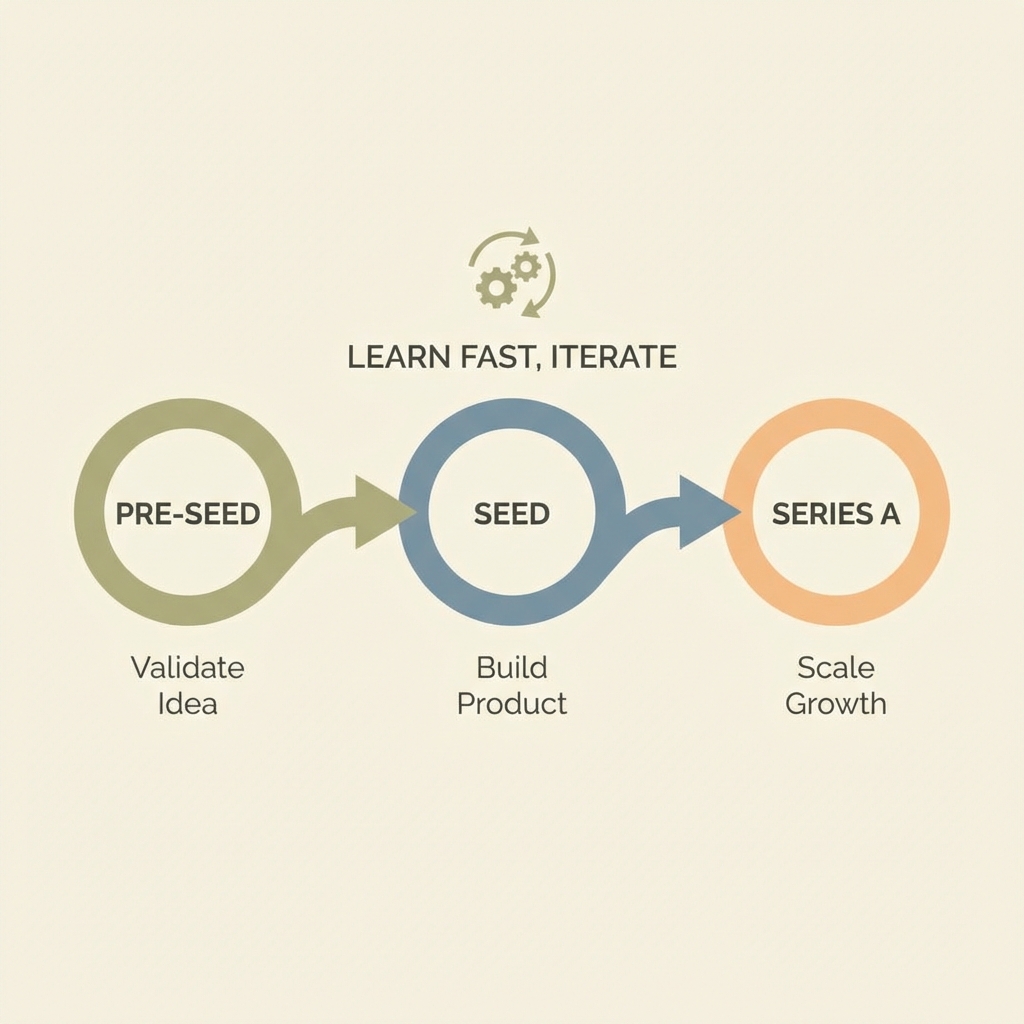
There are three different seed rounds
Founders often get rejected because they pitch the wrong story to the wrong round. It's critical to treat them differently.
1. Pre-seed — belief capital
This stage is about an idea or a very early MVP. You are selling a strong founder narrative and early signals rather than hard data. At pre-seed, you're essentially saying: "Trust my thinking."
2. Institutional seed — signal capital
By this point, you should have real users, a clear use case, and early signs of retention or revenue. You’re selling the fact that "This is working in a small but meaningful way."
3. Seed extension — momentum capital
If you're growing faster than expected and want to reduce future risk, you raise an extension. You’re telling investors to "Double down now" because the conviction is increasing.
Calling all three "seed" is how founders confuse themselves and their potential investors.
Traction at seed is not a dashboard
Traction is behavior, not just numbers on a screen. Numbers can be faked with spend; behavior cannot. Real seed-stage traction looks like:
- Retention > Growth: Users returning without constant reminders.
- Organic Pull: Users finding the product through word-of-mouth, not just ads.
- Pain Threshold: Someone getting angry when your product breaks. That's a sign they need it.
- Negative Feedback: Specific complaints about missing features, rather than general "it's fine" praise.
The Traction Matrix (Domain Specific)
| Domain | What to Track (Signal) | What to Ignore (Noise) | | :--- | :--- | :--- | | B2B SaaS | Weekly Active Teams, Usage Depth | Total Registered Users | | Consumer | Day 30 Retention, K-Factor | Total Downloads, PR Hits | | Dev Tools | Implementation depth, CLI invocations | GitHub Stars, Twitter likes | | Infrastructure| Production workloads, uptime reliance | Trial signups, logo count |
Mental Model: Pull vs. Push. If you have to push your product into users' hands, you are still in the pre-seed phase. Seed starts when the market begins to pull the product out of your hands.

Valuation is a tool — not a trophy
Seed valuation is not a mathematical certainty. It’s a combination of momentum, story, and timing.
The common mistakes founders make include:
- Optimizing solely for the highest valuation.
- Ignoring the quality of the investors.
- Taking money before achieving any clarity.
Healthy seed rounds usually involve:
- 10–20% dilution.
- 12–18 months of runway.
- Investors who stay calm during the inevitable noise of early stages.
Red flags at seed:
- 30%+ dilution.
- Control rights being requested too early.
- An obsession with optics over actual learning.
Bad seed investors don’t just hurt this round — they poison the next one.
Operational Hygiene: Spending the First $2M
The biggest risk after a seed round is Premature Scaling. Founders often hire too fast before they've identified the "Single Atomic Action" that drives value.
The Seed Spending Framework:
- Core Engineering (60%): Build the "Steel Thread"—the simplest path that delivers the core value.
- Customer Discovery (20%): Not marketing, but conversations. Paying for access to feedback.
- Optionality (20%): Reserve for pivots or unexpected technical hurdles.
Mental Model: The Default Alive mindset. Ask yourself: "If we never raise another dollar, how do we get to a point where we don't need to?" Even if you plan to raise an A, operating as if you won't forces discipline.
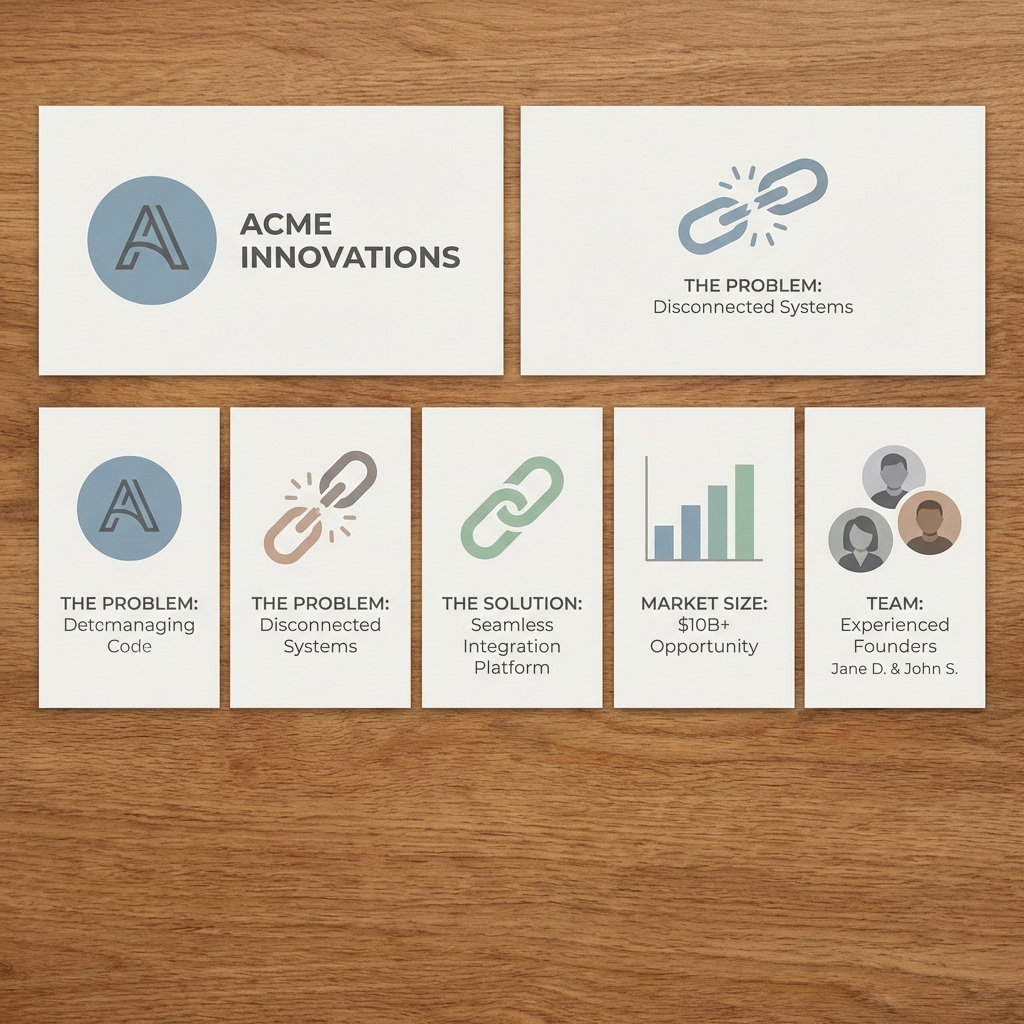
Your seed deck only needs five answers
Seed decks don’t fail because they’re ugly. They fail because they’re confused. Your deck must clearly answer:
- What painful problem exists?
- Why is this solution inevitable?
- Why is this team right?
- What early signal proves this?
- How big could this realistically get?
Avoid feature tours, fantasy TAM slides, and technical flexing. Seed decks sell clarity of thought.
The part nobody warns founders about: psychology
Seed funding changes your behavior. Suddenly, there is a risk of building for optics, fearing a slowdown, or confusing activity with progress.
Remember this: Seed money is borrowed conviction.
It doesn’t reduce responsibility; it increases it. The best founders use seed funding to:
- Kill bad ideas faster.
- Focus harder on one essential truth.
- Say "no" more often than "yes".
Conclusion
Seed funding is not validation. It’s permission. It is permission to learn faster, to be wrong publicly, and to earn belief through progress.
Raise seed when you have signal instead of noise, when you know exactly what you need to prove next, and when you are ready for the accountability that comes with it. Not just because everyone else is doing it.