Company Registration Options in India
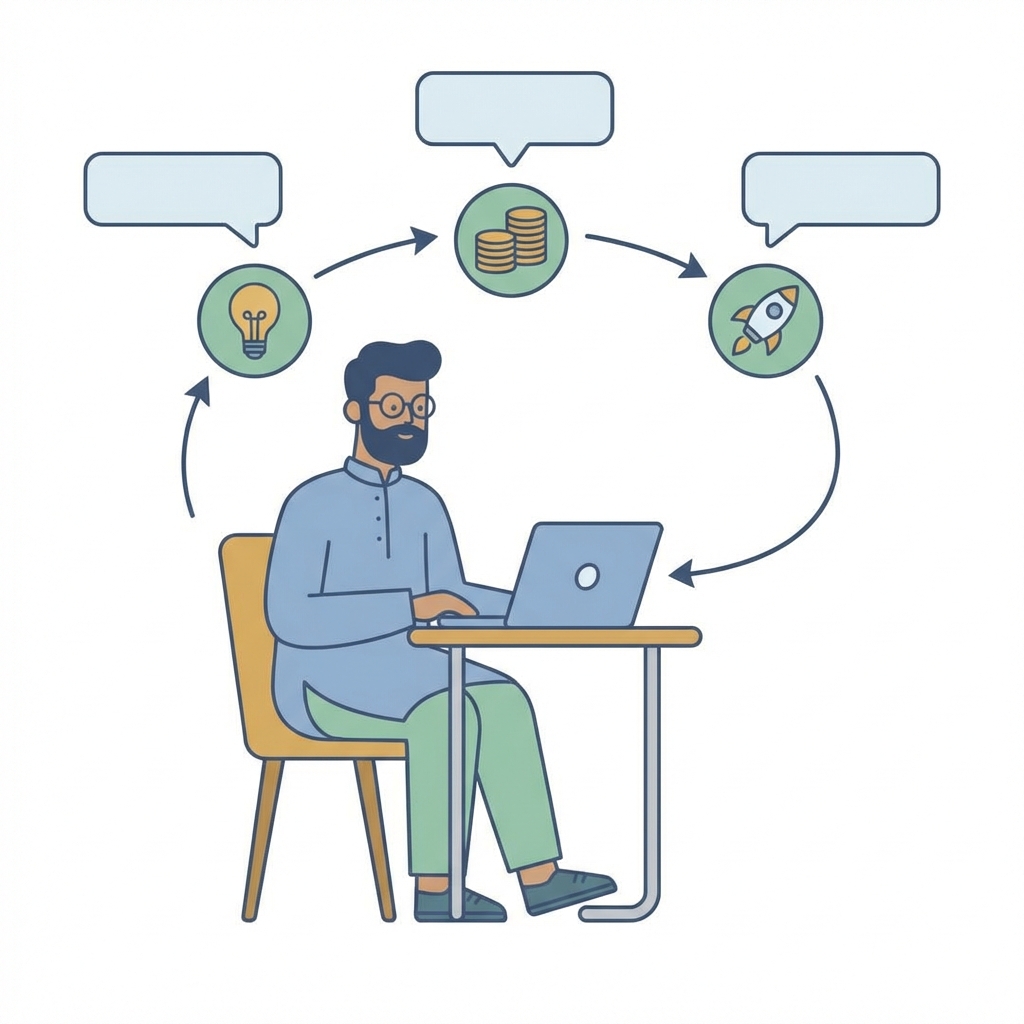
Company Registration Options in India
If you’re a working professional thinking about starting something on the side, the first confusing question is always:
“Do I need to register a company right now?”
Short answer: No.
Better answer: Register only when it actually helps you.
This guide is written for:
- Engineers building after work
- Professionals experimenting with side income
- Anyone who wants to avoid HR or moonlighting issues
You’ll learn:
- All company registration options in India
- A safe, practical path: Sole Proprietor → Private Limited
- Exact steps + official portals
- Moonlighting do’s and don’ts
No legal overkill. Just real-world clarity.
Company Registration Options in India (Quick Overview)
Before choosing, understand what each option really means.
🧍♂️ Sole Proprietorship
- What it is: You and your business are legally the same.
- Advantages:
- No formal registration
- Zero setup cost
- Fastest way to start
- Minimal compliance
- Disadvantages:
- No separate legal identity
- Unlimited liability
- Not investor-friendly
- Best for: 👉 Side projects, early validation, freelancers, working professionals
🤝 Partnership Firm
- Advantages: Easy to form, Low compliance
- Disadvantages: Unlimited liability, Weak legal protection, Risky if partners disagree
- Best for: 👉 Rarely recommended today
📜 Limited Liability Partnership (LLP)
- Advantages: Limited liability, Lower compliance than Pvt Ltd, Good for services and agencies
- Disadvantages: Not VC-friendly, ESOPs are difficult, Equity structuring is limited
- Best for: 👉 Bootstrapped agencies or consulting firms
🏢 Private Limited Company (Pvt Ltd)
- Advantages: Separate legal identity, Investor & ESOP friendly, Clear ownership structure, Scales well
- Disadvantages: Annual compliance, More paperwork, Higher maintenance cost
- Best for: 👉 Startups that want to scale or raise funding
🌱 One Person Company (OPC)
- Advantages: Single founder, Pvt Ltd-like structure
- Disadvantages: Forced conversion rules, Less flexibility
- Best for: 👉 Very niche use cases
The Practical Suggestion (For Working Professionals)
For most professionals, the lowest-risk and smartest path is:
Sole Proprietor → Private Limited Company
Why this works:
- You start quietly
- You avoid early compliance burden
- You reduce employer risk
- You formalize only when traction demands it
Stage 1: Start as a Sole Proprietor (Step-by-Step)
This stage is about testing ideas without attracting attention.
🔹 Step 1: Use Your PAN as Business Identity
- No registration needed
- Your PAN = business PAN
- Income is treated as personal income
- Taxes filed as an individual (later, with CA help)
👉 Nothing public. Nothing searchable. This is why it’s moonlighting-safe.
🔹 Step 2: Register on Udyam (MSME) — Optional but Useful
Portal: Udyam Registration
- Why: Free and instant, Adds basic business credibility, Useful for banks and vendors
- What you need: Aadhaar, PAN, Business activity description
⚠️ This does not make you a company or expose you publicly.
🔹 Step 3: Keep Business Money Separate
- Early stage: personal account is okay
- Later: open a current account using: PAN, Udyam certificate, GST (if applicable)
👉 Never mix employer salary and business income long-term.
🔹 Step 4: GST Registration (Only If Mandatory)
Register GST only if:
- You cross the turnover threshold
- You sell inter-state
- You sell via marketplaces
Portal: GST Portal
⚠️ GST increases compliance — delay unless required.
🔹 Step 5: What to Avoid (Moonlighting Safety)
- ❌ Don’t register Pvt Ltd yet
- ❌ Don’t publicly brand yourself as “Founder / CEO”
- ❌ Don’t compete with your employer’s business
- ❌ Don’t use office devices, tools, or IP
✅ Treat this phase as: “A paid experiment, not a company”
Moonlighting: What Really Matters
This is where most professionals make mistakes.
❌ High-risk actions
- Running a Pvt Ltd secretly
- Aggressive public marketing
- Competing with employer domain
- Using company time or devices
✅ Safer practices
- Read your offer letter carefully
- Keep the activity small and private
- Separate time, tools, and identity
- Avoid LinkedIn hype
Rule of thumb: If HR Googles you, nothing should look like a full-time business.
Stage 2: Convert to Private Limited (When Ready)
Convert only when at least one is true:
- Revenue is consistent
- You’re adding co-founders
- You plan to raise funding
- You’re leaving your job
- You want ESOPs
Private Limited Company Registration (Clear Steps)
All filings happen via Ministry of Corporate Affairs (MCA).

🧩 Step 1: Digital Signature Certificate (DSC)
- Required for all directors
- Used to sign MCA forms
🧩 Step 2: Director Identification Number (DIN)
- Generated automatically during incorporation
- No separate application needed
🧩 Step 3: Company Name Reservation
- Done via SPICe+ Part A
- Keep 2–3 backup names
- Avoid trademarks and generic words
🧩 Step 4: Incorporation Filing (SPICe+ Part B)
Includes:
- Company incorporation
- PAN & TAN
- DIN
- Registered office
Documents: PAN & Aadhaar, Address proof, Photo, Email & mobile
🧩 Step 5: Certificate of Incorporation 🎉
You receive:
- CIN (Corporate Identity Number)
- PAN
- TAN
You are now officially a Private Limited Company.
🧩 Step 6: Post-Incorporation Basics
- ✔ Open current account
- ✔ Appoint CA
- ✔ Issue share certificates
- ✔ Track compliance
Optional: Startup India recognition
Final Advice (Founder to Founder)
If you’re a working professional:
- Don’t rush registration
- Don’t invite HR trouble early
- Let traction force structure, not excitement
Most startups didn’t start as companies. They started as responsible side projects.
Closing Thought
Build quietly.
Validate honestly.
Formalize only when it truly matters.